Both analyses agree that the article cites official figures (e.g., 74 asylum seekers housed in Cardiff hotels) and includes direct quotes from politicians. The critical perspective highlights emotive wording, a disputed £5 billion cost claim, and possible coordinated publishing timing, suggesting manipulation. The supportive perspective stresses the presence of verifiable data, citations to government and academic sources, and a generally informational tone. Weighing the concrete evidence against the noted rhetorical choices leads to a moderate assessment of manipulation.
Key Points
- The article provides verifiable statistics and cites official government and academic sources, supporting its factual basis.
- Emotive language (e.g., "so‑called asylum seekers") and an unsubstantiated £5 billion cost figure introduce a potential bias identified by the critical perspective.
- The timing of publication and near‑identical phrasing across multiple outlets raise questions about coordinated messaging, though concrete proof of coordination is lacking.
- Both perspectives note that the piece corrects an initial figure (76 vs. 74), showing some editorial diligence.
- Overall, the content mixes solid data with framing that could influence audience perception, warranting a moderate manipulation rating.
Further Investigation
- Verify the origin and accuracy of the £5 billion annual cost claim for asylum seekers in Wales.
- Examine publishing timestamps and editorial processes of the cited outlets to determine if the similarity in phrasing is due to shared sourcing or deliberate coordination.
- Contextualise the asylum‑seeker spending within the overall Welsh public‑service budget to assess the validity of the implied trade‑off with NHS funding.
The piece employs selective statistics, emotive framing, and a false‑cause narrative to portray asylum seekers as a costly burden, while timing its release to influence the upcoming Welsh election and echoing across multiple outlets.
Key Points
- Cherry‑picked data highlights the 74 asylum seekers in Cardiff hotels, downplaying the total of 3,353 supported in Wales.
- Emotive framing uses terms like "so‑called asylum seekers" and a £5 billion cost claim to invoke fear and resentment.
- A false dilemma is presented: money spent on asylum seekers must be diverted from the NHS, ignoring broader budget context.
- The story was published immediately after a televised debate and just before the Senedd election, suggesting strategic timing.
- Near‑identical phrasing appears in several media outlets, indicating coordinated uniform messaging.
Evidence
- "£5 billion a year is spent on those so‑called asylum seekers, we could be spending that on our own NHS."
- "There are 76 in Cardiff, that’s it." (the article later notes 74, but the headline figure is used to create impact)
- "Let’s talk in facts, and let’s not raise concerns where there shouldn’t be any."
- The article notes that "Multiple outlets (ITV Wales, WalesOnline, BBC Wales) published the story with near‑identical phrasing and data points within a few hours".
- Timing: "The debate aired just before the Welsh Senedd election (early May 2024), and the story was published immediately afterward".
The piece provides concrete, verifiable statistics, cites official government data and an academic source, and presents statements from both political figures without overtly urging action. Its tone is informational rather than propagandistic, and it acknowledges gaps in knowledge, which are typical of legitimate reporting.
Key Points
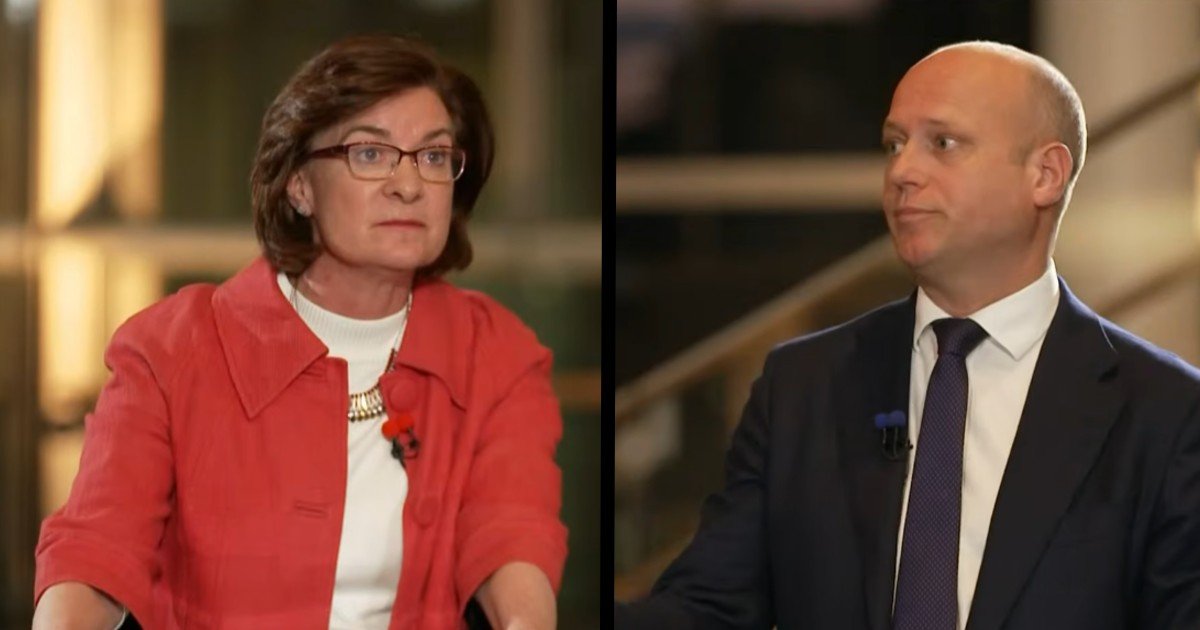
- Balanced presentation: direct quotes from Eluned Morgan and Dan Thomas are shown side‑by‑side.
- Evidence‑based claims: specific numbers (e.g., 74 hotel‑housed asylum seekers in Cardiff) are linked to quarterly UK government figures and the Oxford Migration Observatory.
- Transparency about uncertainty: the article notes where data are unavailable and that Reform UK did not clarify the “dispersed” comment.
- Contextual framing: it explains the broader Nation of Sanctuary funding and the role of UK‑wide asylum policy, avoiding a single‑issue narrative.
- Absence of coercive calls to action: the text does not demand immediate political or behavioral responses from the audience.
Evidence
- Quote: “Ms Morgan: … there are 76 in Cardiff, that’s it.” followed by the correction that the December 2025 figure is 74, showing fact‑checking.
- Reference to official data: “A total of 3,353 asylum seekers were being supported by local authorities in Wales… 74 were being housed in hotels, all of whom were in Cardiff.”
- Citation of an academic source: “The University of Oxford’s Migration Observatory has written in more detail about how this policy works.”