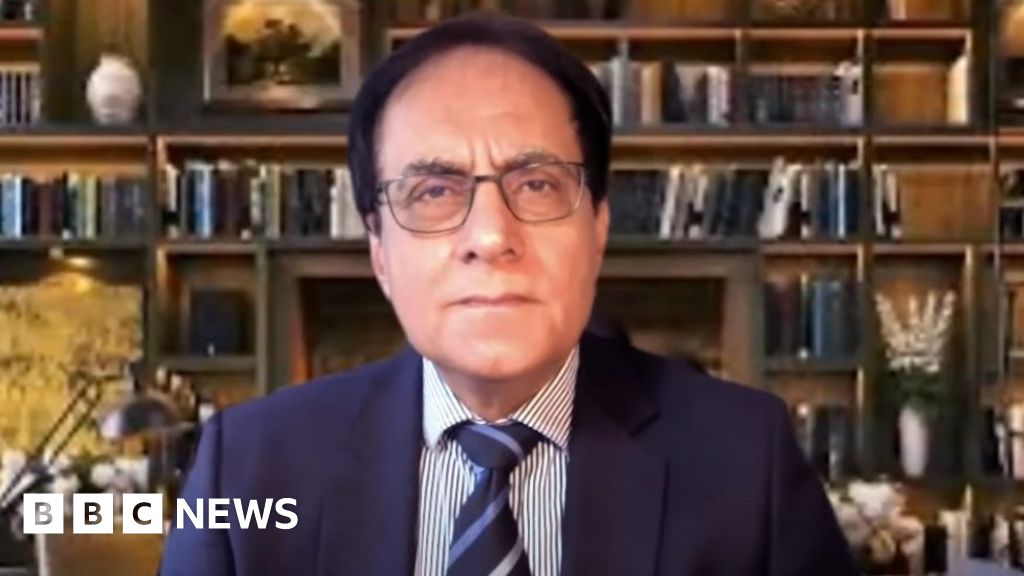
Both analyses agree the piece contains verifiable facts about a medical tribunal’s disciplinary action, but they diverge on the degree to which the article’s framing and the surgeon’s statements constitute manipulation. The critical perspective highlights emotional and authority‑based cues that could sway readers, while the supportive perspective emphasizes the presence of concrete, checkable details and a largely neutral reporting tone. Weighing the evidence, the factual backbone appears solid, yet the inclusion of conspiratorial language suggests a modest level of manipulative framing.
Key Points
- The article provides specific, verifiable institutional details (tribunal, dates, employment) that support authenticity.
- The surgeon’s quoted statements employ fear‑based and conspiratorial language, which the critical perspective flags as emotional manipulation.
- Both perspectives note that the piece presents the tribunal’s rationale alongside the surgeon’s claims, allowing readers to see both sides.
- The manipulative elements (authority overload, framing) are present but are interwoven with factual reporting, suggesting a moderate rather than extreme level of manipulation.
Further Investigation
- Obtain the official Medical Practitioners Tribunal decision to confirm the quoted language and context.
- Review the surgeon’s original social‑media posts to assess whether the article excerpts are representative or selectively edited.
- Compare the article’s vaccine safety claims with peer‑reviewed epidemiological data to evaluate the cherry‑picked assertions.
The piece mixes factual reporting of a disciplinary action with the surgeon’s emotive, conspiratorial statements, creating emotional appeal and framing that can sway readers against public health measures. It leverages the surgeon’s authority while cherry‑picking vaccine injury claims and drawing historical parallels to amplify distrust.
Key Points
- Uses the surgeon’s medical credentials to lend weight to anti‑vaccine claims (authority overload)
- Repeats fear‑based language about deaths from lockdowns and alleged vaccine harms (emotional manipulation and repetition)
- Frames the narrative as a battle between a “malicious” establishment and a truth‑seeking minority (tribal division, framing)
- Presents anecdotal vaccine injury claims without broader safety data (cherry‑picked data)
- Invokes historical conspiracies (Iraq WMD) to legitimize current claims (historical parallels)
Evidence
- "Mr Muhammad Adil... used his position as a doctor... to promote his opinions..."
- "People have been killed by lockdowns, fear created of dying, heart attacks, cancers, lung diseases, strokes..."
- "Do you think coronavirus scam & lucrative business of the mRNA vaccine... would be buried like the big lies of \"Weapons of mass destructions in Iraq\""
- "Not a single trial has proved efficacy of mRNA vaccine to be safe and effective"
The article provides concrete, verifiable details about a medical tribunal’s disciplinary action, includes direct quotations from both the tribunal and the surgeon, and does not contain overt calls to action or promotional messaging.
Key Points
- Specific institutional references (Medical Practitioners Tribunal, North Manchester General Hospital, dates of employment) that can be cross‑checked in public records.
- Direct quotes from the tribunal’s decision and from the surgeon’s own social‑media posts, allowing readers to see the primary language used.
- Neutral reporting tone: the piece reports the outcome and the surgeon’s statements without urging readers to adopt a particular stance or to take immediate action.
- Balanced presentation of perspectives – it reports the tribunal’s rationale as well as the surgeon’s claims, allowing the audience to evaluate both sides.
Evidence
- The text states: "The Medical Practitioners Tribunal ruled that Mr Muhammad Adil undermined public health..." and cites the tribunal’s language about "abuse of position" and "only means of protecting the public".
- It provides a timeline: "Mr Adil worked as a locum consultant colorectal surgeon for the trust between April and October of 2020" and notes the June 2022 suspension and subsequent striking‑off.
- Quotations from the surgeon’s tweets are presented verbatim, e.g., "Covid is only a flu virus. It has not killed people..." allowing verification against the original social‑media posts.