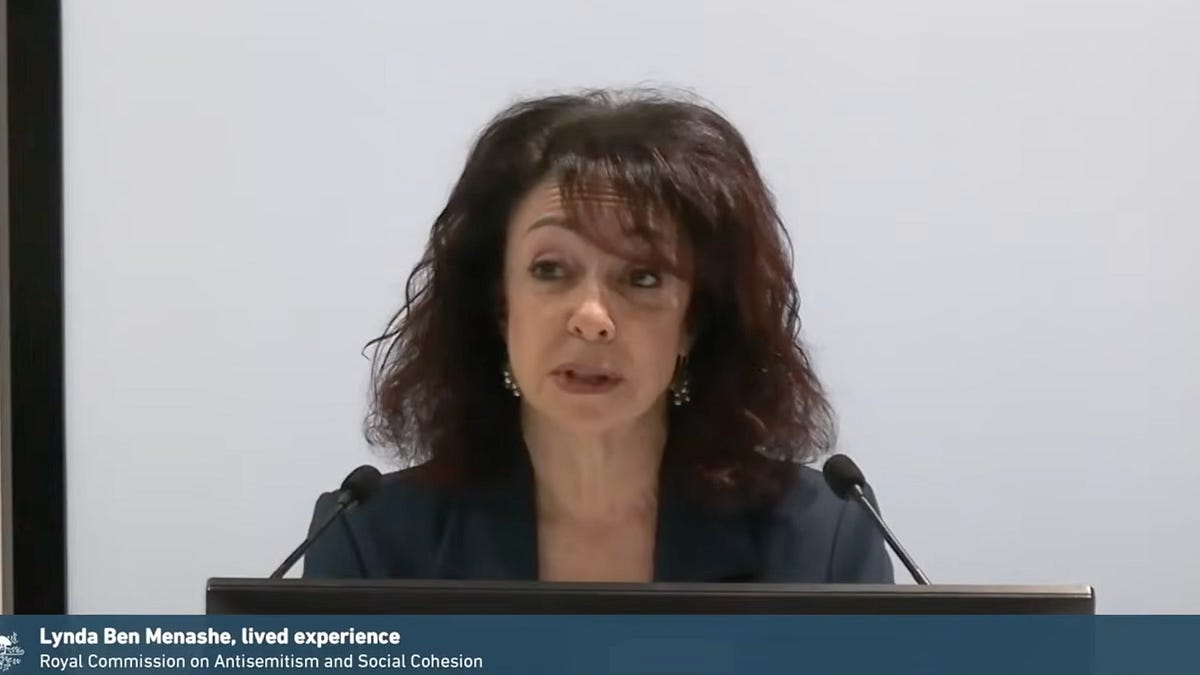
Both analyses agree the piece discusses the Royal Commission and includes detailed excerpts, but they differ on intent. The critical perspective sees selective quoting, cost framing, and tribal language as manipulation, while the supportive perspective highlights verifiable citations, historical context, and a corrective tone, suggesting lower manipulative intent.
Key Points
- The article contains specific transcript citations that can be cross‑checked, supporting the supportive view of factual grounding.
- The framing of taxpayer cost and references to a "pro‑Israel lobby" may create a bias narrative, aligning with the critical view of selective emphasis.
- Emotive language appears in both perspectives; its impact depends on whether it serves factual clarification or partisan framing.
- Absence of urgent calls to action and inclusion of detailed data point toward authenticity, yet the selective presentation of excerpts raises concerns about completeness.
Further Investigation
- Verify the transcript excerpts cited (e.g., Lynda Ben Menashe, May 7, day 4) against the official Royal Commission records.
- Assess the full context of the quoted passages to determine whether opposing testimony was omitted.
- Examine the source of the cost figure ($131.1m) and how it is presented in the broader discourse about the commission.
The piece frames the Royal Commission as a costly, biased exercise driven by a pro‑Israel lobby, uses selective factual corrections and emotive language to cast the commission in a negative light, and omits broader context, creating a tribal us‑vs‑them narrative.
Key Points
- Selective cherry‑picking of witness excerpts to highlight errors while ignoring testimony that may support the commission’s findings.
- Framing techniques that emphasize taxpayer cost and alleged lobby influence, evoking anger and distrust.
- Tribal division language that pits “pro‑Israel lobby groups” against “pro‑Palestinian” voices, suggesting a binary conflict.
- Missing contextual information about the commission’s mandate and the full range of testimonies, limiting the reader’s ability to assess the issue comprehensively.
Evidence
- "...costing taxpayers $131.1m – were several inaccuracies about Israel, Palestine and Lebanon that went unchecked."
- "...pro‑Israel lobby groups, seeking to equate antisemitism to criticism of Israel..."
- "...the Israeli siege… ‘we are fighting human animals and we are acting accordingly.’"
- "Alhadeff’s own submission ... stated the woman said the ‘tentacles’ of Australia’s ‘Israel lobby’" – shows selective quoting.
The piece presents itself as a fact‑check of the Royal Commission hearings, using direct transcript excerpts, specific dates and casualty figures, and historical context to correct perceived errors. Its tone is corrective rather than rallying, and it does not issue urgent calls to action, which are hallmarks of authentic informational content.
Key Points
- Direct quotations are paired with precise citation details (date, day, page, line), enabling verification against the official transcript.
- Historical claims (e.g., Hezbollah’s founding date) are supported by widely accepted timelines, and casualty numbers are sourced to UN reports.
- The article acknowledges the commission’s cost and media coverage but frames its purpose as correcting the record, not mobilising a campaign.
- No explicit calls for immediate political or financial action are present; the focus remains on factual clarification.
- Even when emotive language appears, it is tied to specific factual disputes rather than vague appeals.
Evidence
- Quote from Lynda Ben Menashe (May 7, day 4, p371, line 5) is cross‑checked with the historical timeline that Hezbollah was founded after the 1982 invasion, not in 1982.
- UN‑reported figures for October 8–9 (413 dead, 2,300 injured, 123,000 displaced, rising to 687 dead, 3,800 injured, 187,518 displaced) are cited to refute the claim that Israel had not responded by October 9.
- The article references an ABC coverage analysis conducted jointly with Newscord, indicating a systematic review rather than anecdotal observation.