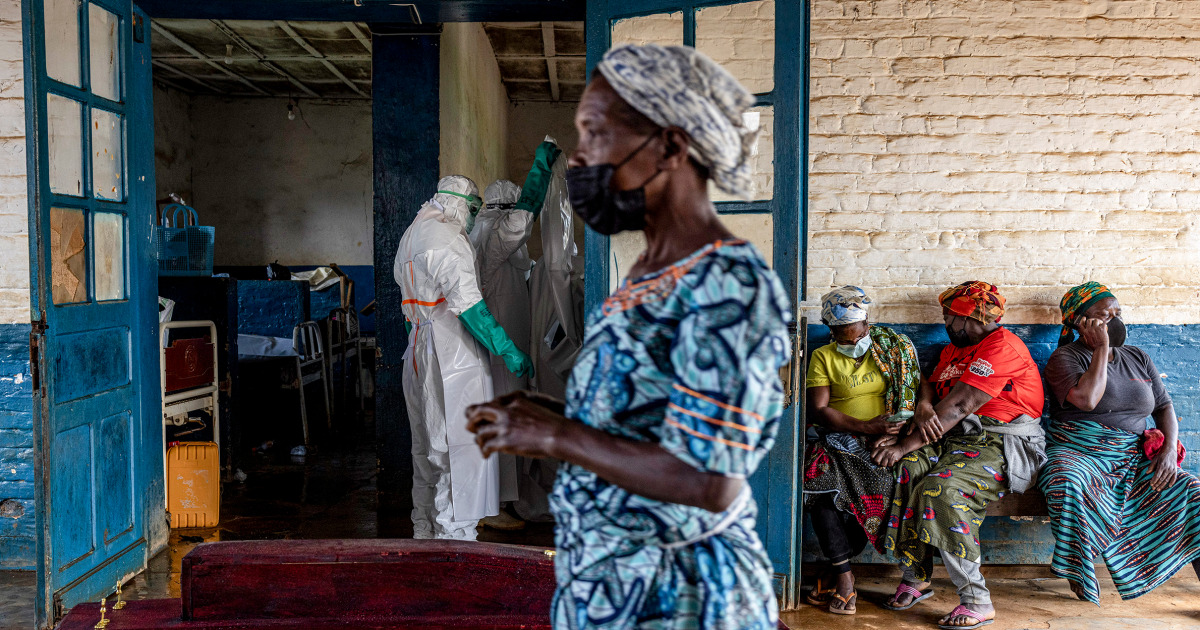
Both analyses agree the article contains concrete, verifiable data and quotes from reputable humanitarian actors, but they differ on the impact of its language and framing. The critical perspective flags emotionally charged wording and selective emphasis that could heighten fear, while the supportive perspective emphasizes the breadth of sources and transparent reporting of uncertainties. Weighing the evidence, the piece shows modest signs of persuasive framing but remains largely grounded in factual reporting, suggesting a low‑to‑moderate level of manipulation.
Key Points
- The article includes verifiable WHO statistics and multiple on‑the‑ground expert quotes, supporting its factual credibility (supportive perspective).
- It employs fear‑laden terms such as "witchcraft" and "wildfire" and frames the situation as a binary conflict, which can amplify anxiety (critical perspective).
- Both perspectives note the inclusion of community dynamics (protests, burial practices), but the critical view argues these are presented without deeper socio‑political context, while the supportive view sees this as balanced reporting.
- The piece acknowledges gaps (lack of vaccine for the Bundibugyo strain, testing delays), indicating transparency, yet the urgency language (“race,” “scrambling”) may steer readers toward a heightened sense of emergency.
- Overall, the evidence leans toward a legitimate informational piece with modest persuasive framing rather than overt manipulation.
Further Investigation
- Obtain the original WHO situation reports to confirm the exact case and death numbers cited.
- Interview local community leaders to understand the broader socio‑political context behind the protests and burial practices.
- Analyze the article’s overall tone across its full length to quantify the proportion of fear‑laden language versus neutral reporting.
- Check for any follow‑up reporting on the availability of a vaccine for the Bundibugyo strain to assess completeness of the information.
The piece uses emotionally charged language and framing to heighten fear about the Ebola outbreak, selectively presents data, and simplifies complex causes, but it largely relies on expert quotes and factual reporting, indicating modest manipulation.
Key Points
- Use of fear‑laden terms (e.g., “witchcraft,” “worst outbreak,” “wildfire”) to amplify anxiety
- Framing the crisis as a binary battle between health workers and “traditional practices,” oversimplifying epidemiology
- Selective presentation of case numbers without broader context or mention of ongoing vaccine trials
- Urgency framing with verbs like “race” and “scrambling,” steering perception toward emergency
- Highlighting community protest and suspicion to underscore division without exploring underlying socio‑political factors
Evidence
- "The initial thought for the family, even the patient, was that this was related to traditional practices, or maybe even witchcraft,"
- "It has all the potential of being the worst outbreak,"
- "teams on the ground are scrambling to contain what they feel is like a growing wildfire."
- "It’s a race to set up the treatment centers, the screening units,"
- "protesters ... set fire to hospital tents after they weren’t allowed to take back the body of a loved one for burial."
The article presents verifiable data, cites multiple on‑the‑ground experts, and acknowledges both challenges and uncertainties without demanding immediate action, indicating a legitimate informational piece.
Key Points
- Multiple independent humanitarian actors (Mercy Corps, International Medical Corps, MSF) are quoted with specific titles, providing source diversity.
- Concrete WHO case numbers (750 cases, 177 deaths) are included, allowing external verification.
- The piece openly discusses gaps (lack of vaccine for the Bundibugyo strain, testing delays) rather than presenting a one‑sided narrative.
- Local community dynamics (traditional burial practices, protests) are reported alongside response efforts, showing balanced context.
- No overt calls for urgent political or financial action beyond reporting the U.S. State Department's aid, reducing persuasion pressure.
Evidence
- "The initial thought for the family..." – direct quote from Rose Tchwenko, Mercy Corps country director.
- WHO statistics: "As of Friday, the World Health Organization has reported 750 cases and 177 deaths."
- Mention of diagnostic limitation: "standard Ebola tests were coming back negative... the rare strain called Bundibugyo" cited by Alan Gonzalez, MSF.
- U.S. State Department funding: "committed to mobilizing an initial $23 million in foreign assistance".
- Community reaction: "protesters in the town of Rwampara set fire to hospital tents" highlighting local tension.