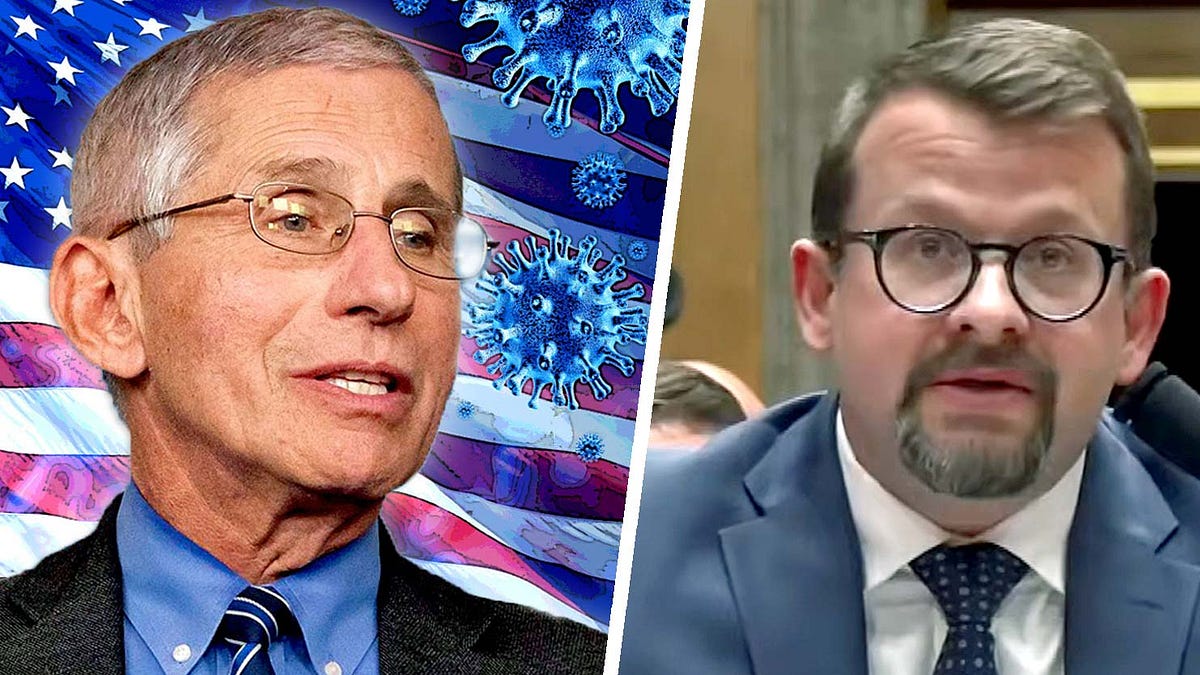
Both analyses agree that the article contains many specific details (committee names, dates, quotations) that resemble authentic legislative testimony, but they differ on how persuasive those details are. The critical perspective argues that the story hinges on a single, unverified CIA whistleblower, uses charged language, and omits any corroborating evidence, suggesting a strong manipulation signal. The supportive perspective points out the procedural specificity as a sign of authenticity, yet acknowledges the lack of independent verification. Weighing the unsubstantiated reliance on one source against the plausibility of the procedural elements leads to a moderate‑to‑high suspicion of manipulation.
Key Points
- The article relies on a single, unverified CIA whistleblower (James E. Erdman III) with no independent corroboration, which the critical perspective flags as an authority‑overload and a manipulation cue.
- Procedural details (Senate hearing, subpoena, specific dates, quoted testimony) are present and could indicate genuine reporting, as highlighted by the supportive perspective, but they are not independently verified.
- Emotive and partisan framing (terms like "cover‑up," focus on Republican actors, omission of Democratic voices) strengthens the manipulation signal identified by the critical perspective.
- Both perspectives note a lack of external evidence (no statements from Fauci’s office, no independent media reports), leaving the core claim unsubstantiated.
- Given the balance of unverified authority versus plausible procedural context, the overall assessment leans toward higher manipulation suspicion.
Further Investigation
- Seek independent verification of James E. Erdman III’s employment with the CIA (e.g., official records, reputable news outlets).
- Confirm whether the cited Senate hearing and subpoena actually occurred (official Senate committee calendars, transcripts, press releases).
- Obtain statements from the Fauci office, the CIA, or other agencies referenced to see if they acknowledge or refute the alleged cover‑up.
- Analyze the original source of the article (publisher, author) for track record on factual reporting and potential partisan bias.
The piece relies heavily on a single, unverified CIA whistleblower and uses charged language (“cover‑up”, “whistleblower”, “spell”) to stoke fear and anger, while framing the story as a partisan battle between Republican lawmakers and a corrupt scientific establishment. It omits corroborating evidence, presents a binary narrative, and highlights beneficiaries who stand to gain politically from the claim.
Key Points
- Authority overload – the story leans on James E. Erdman III’s testimony without independent verification.
- Emotional and fear appeals – repeated use of “cover‑up”, “retaliation”, and suggestions of a hidden lab‑leak driving vaccine mandates.
- Tribal division – emphasizes Republican actors and the absence of Democrats, creating an us‑vs‑them framing.
- Missing context – no presentation of counter‑evidence, documents, or statements from Fauci’s office.
- Beneficiary motive – Republican senators and anti‑vaccine groups gain political traction and media attention.
Evidence
- "CIA whistleblower: Fauci Led Multi‑Agency Cover‑Up of COVID Lab Leak Evidence" (headline).
- "Dr. Fauci’s role in the cover‑up was intentional," said James E. Erdman III, a senior operations officer for the CIA.
- "No Senate Democrats attended or participated in today’s hearing — an absence Holland called ‘inexcusable.’"
- "Erdman said the cover‑up continues today and that CIA whistleblowers have faced retaliation from the agency."
- "The CIA was ‘not happy’ with today’s hearing" (Fox News report).
The article contains several concrete procedural details—specific committee names, a subpoena, dates of alleged testimony, and direct quotations—that are typical of genuine legislative testimony. These elements suggest an attempt at authentic communication, even though independent corroboration is missing.
Key Points
- References a specific Senate hearing (Committee on Homeland Security & Governmental Affairs, chaired by Sen. Rand Paul) and a formal subpoena.
- Names a purported CIA officer (James E. Erdman III) with a defined employment window (Mar 2025‑Apr 2026) and a detailed role within the Director’s Initiatives Group.
- Provides a timeline linking CIA internal deliberations (Aug 12 2021 and Aug 17 2021) to the FDA’s vaccine approval, a pattern often seen in genuine whistle‑blower disclosures.
- Includes verbatim quotes attributed to the witness and to other participants (e.g., Mary Holland, Children’s Health Defense), which mirrors standard testimony transcripts.
- Mentions procedural outcomes (e.g., the CIA not clearing the witness, lack of Democratic attendance) that are specific to the legislative process.
Evidence
- "Erdman testified during a hearing organized by the Senate Committee on Homeland Security & Governmental Affairs, chaired by Sen. Rand Paul (R‑Ky.)."
- "Erdman, who worked for the federal Director’s Initiatives Group (DIG) between March 2025 and April 2026, leading its investigation into COVID‑19’s origins..."
- "Erdman testified today in response to a subpoena the Senate committee issued earlier this month..."
- "He said a ‘small circle’ of scientists was involved in the cover‑up and helped promote the theory that the SARS‑CoV‑2 virus had a zoonotic — or natural — origin."
- "Erdman said that while he has not found ‘smoking gun’ documentation of Fauci or…"