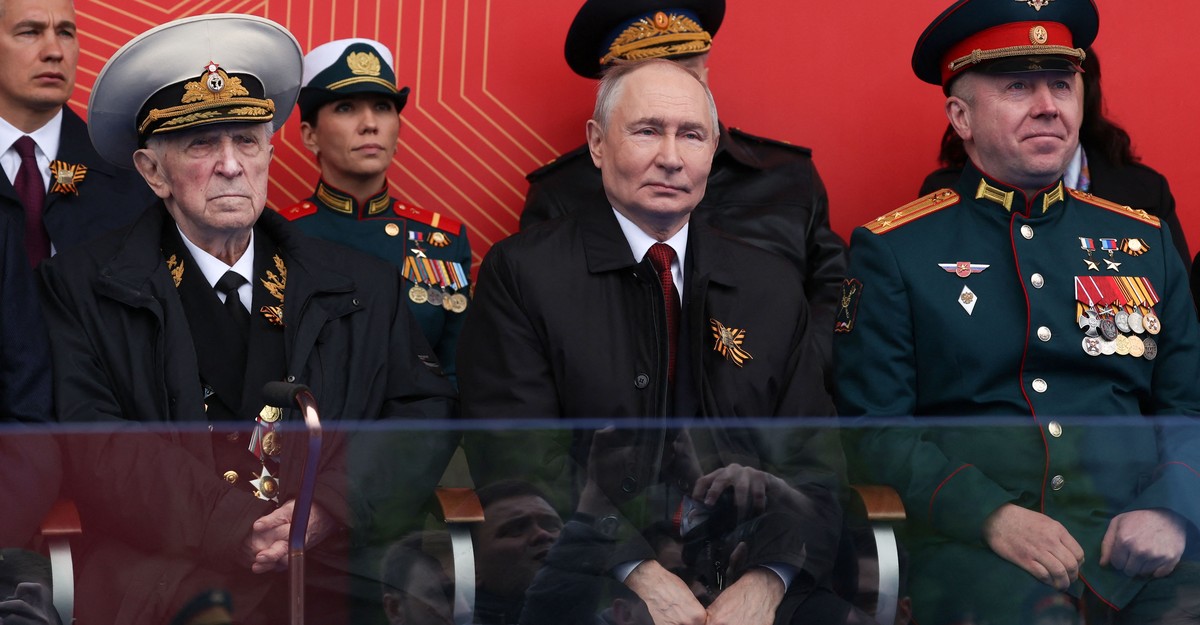
The article mixes verifiable, time‑stamped observations (drone incidents, parade details, Telegram shutdown) with emotionally charged language, vague authority references, and selective framing that paints Russia as a victim. While the concrete facts lend credibility, the manipulation cues identified by the critical perspective raise concerns about bias and agenda, leading to a moderate overall assessment of manipulation.
Key Points
- Both perspectives agree the piece contains specific, date‑bound events that can be cross‑checked (e.g., May 3 drone explosion, May 7 drone shoot‑down claim, empty streets during the May 9 parade).
- The critical perspective highlights persuasive tactics—emotive adjectives, fear appeals, and an unnamed diplomatic source—that can skew perception, suggesting intentional framing.
- The supportive perspective notes the inclusion of multiple actors and cautious language (e.g., “alleged,” “according to a diplomat of my acquaintance”), which can mitigate the impression of outright fabrication.
- Verification of the unnamed diplomatic source, the exact scale of drone attacks, and the extent of Telegram restrictions remain uncertain, limiting a definitive judgment.
Further Investigation
- Obtain independent open‑source verification (satellite images, news reports) of the claimed drone attacks and the May 9 parade composition.
- Identify the diplomatic source referenced and assess its credibility or seek corroborating statements from other officials.
- Confirm the extent and timing of the Telegram access restrictions in Russia during the reported period.
The article employs emotionally charged language, vague authority citations, and selective facts to frame Russia as a victim of its own propaganda and to stoke anti‑Putin sentiment, indicating manipulation tactics.
Key Points
- Use of charged adjectives and fear‑appeals (e.g., "anxiety", "brutal war", "no mercy") to provoke anger and anxiety.
- Reliance on vague, unverifiable authority (“a diplomat of my acquaintance”) to lend credibility without evidence.
- Cherry‑picking of data about drone attacks and the May 9 parade while omitting broader context on Ukrainian operations and Russian military capacity.
- Framing that creates a tribal "us vs. them" divide, casting Russians as oppressed by the "Kyiv regime" and Western media.
- Omission of counter‑perspectives on censorship measures, presenting them solely as repression.
Evidence
- "the Russian foreign minister issued a threat, promising ‘no mercy,’ whatever that means"
- "According to a diplomat of my acquaintance, snipers were visible in and around Red Square"
- "Fewer foreign leaders bothered to show up this year, and no tanks, missiles, or fighting vehicles were on display"
- "The tone of Russia’s official communications has changed, and no wonder: ... Muscovites have no choice but to think about the war"
- "Solemn North Korean soldiers, marching alongside Russians, provided the only novelty"
The piece contains several concrete, time‑stamped observations (drone attacks on specific dates, details of the May 9 parade, Telegram shutdown) that can be cross‑checked, and it references publicly known events, which are hallmarks of legitimate communication.
Key Points
- Specific dates, locations and observable facts (e.g., May 3 2023 drone explosion over the Kremlin, May 7 Russian air force claim of shooting down hundreds of drones, empty streets during the May 9 parade) that are verifiable via open‑source media.
- Descriptive details that could be corroborated by independent sources such as photographs, satellite imagery, or official statements (e.g., lack of tanks on the parade, presence of North Korean troops).
- The article mentions multiple actors (Russian foreign minister, Kremlin spokesperson, Ukrainian president, US president, a diplomat acquaintance) rather than presenting a single‑sided narrative, indicating an attempt at breadth.
- It acknowledges uncertainty by citing a “diplomat of my acquaintance” and noting that some security measures are “alleged,” which shows a modest degree of caution rather than outright fabrication.
Evidence
- "On the morning of May 7, the mayor of Moscow announced that the Russian air force had shot down hundreds of Ukrainian drones..."
- "Photographs taken on the day of the parade show empty streets."
- "The Russian foreign minister issued a threat, promising 'no mercy,' ... The Kremlin’s spokesperson reassured Muscovites that security was tight because the 'threat from the Kyiv regime' had already been taken into account."
- "In April the state cut access even to the Russian‑built app Telegram, as well as many VPNs."