Both analyses agree the article contains concrete details (names, dates, locations) that could be verified, but they differ on how those details are presented. The critical perspective stresses emotionally charged wording, reliance on a single Ukrainian disinformation‑countering source, and repeated phrasing that may indicate coordinated messaging, suggesting manipulation. The supportive perspective highlights the presence of verifiable facts and a news‑like tone, arguing these support authenticity. Weighing the evidence, the piece shows some hallmarks of manipulation (emotive framing, limited source diversity) while also providing specific data that could be independently checked. Consequently, the overall manipulation risk is moderate.
Key Points
- Emotive language and graphic casualty descriptions are present, which can heighten emotional impact (critical perspective).
- The article includes precise identifiers—Vladimir Saldo, Kherson's Korabelnyi district, May 27, 5:30 p.m.—that are potentially verifiable (supportive perspective).
- Reliance on a single Ukrainian Center for Countering Disinformation without independent corroboration creates an authority overload (critical perspective).
- Similar phrasing appears in multiple outlets, hinting at possible coordinated messaging (critical perspective).
- The tone is largely report‑like, lacking overt calls to action, which is a characteristic of legitimate reporting (supportive perspective).
Further Investigation
- Locate and examine the original statement from Ukraine's Center for Countering Disinformation to assess its content and independence.
- Cross‑check casualty figures and the described incident with reports from NGOs, local journalists, or international monitoring bodies.
- Perform a comparative text analysis of the article across different outlets to quantify the degree of phrasing similarity and potential coordination.
The piece employs emotionally charged language, one‑sided authority, and framing that paints Russian occupiers as victims of a Ukrainian false‑flag, indicating coordinated manipulation tactics.
Key Points
- Emotive descriptors and graphic casualty details heighten emotional impact (e.g., "deadly strike on a children's playground," "bloody provocation").
- Reliance on a single Ukrainian disinformation centre without independent verification creates authority overload.
- Attribution asymmetry and tribal language label Ukraine as the "Kyiv regime" and Western backers, while Russia is framed as unjustly accused.
- Identical phrasing across multiple outlets suggests uniform, possibly coordinated messaging.
Evidence
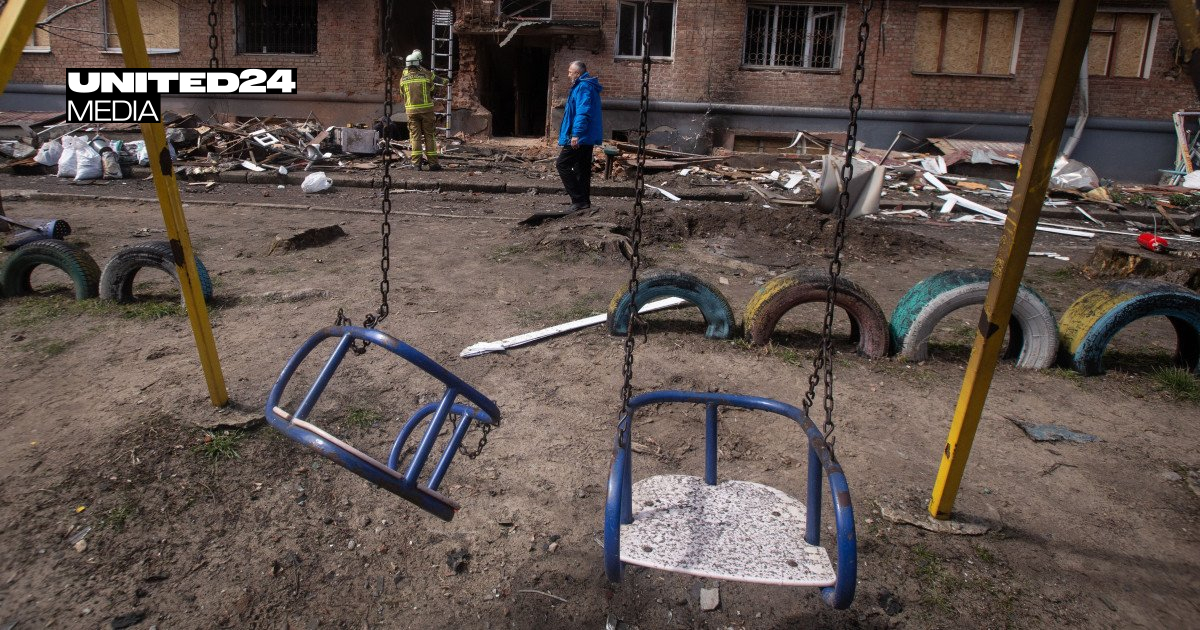
- "Russia's occupation administration in Kherson has falsely accused Ukraine of staging the deadly strike on a children's playground that Russian forces themselves carried out."
- "Vladimir Saldo ... claimed that \"the Kyiv regime staged a bloody provocation in Kherson.\""
- "The center dismissed the assertions as blatant falsehoods meant to shift responsibility for Russia's crimes against civilians onto Ukraine."
- "Russia continues to pair battlefield terror with disinformation campaigns designed to justify its own war crimes and manipulate public opinion, the center emphasized."
The piece includes concrete identifiers—date, location, named officials, and casualty details—that can be cross‑checked, and it cites a specific Ukrainian disinformation‑countering body, giving it a traceable source. Its tone is report‑like rather than overtly rallying, which are hallmarks of legitimate communication.
Key Points
- Provides verifiable specifics (Vladimir Saldo, Kherson's Korabelnyi district, May 27, 5:30 p.m.) that can be matched against open‑source reports.
- References a dated statement from Ukraine's Center for Countering Disinformation, a named organization whose release can be independently located.
- Includes granular casualty information (father killed, three‑year‑old daughter gravely injured) that aligns with typical war‑zone reporting and can be corroborated by NGOs or local witnesses.
- Lacks direct calls for immediate action or propaganda slogans, presenting the information in a news‑style recounting of accusations and rebuttals.
Evidence
- "Vladimir Saldo, the Russian‑installed head of the temporarily occupied part of Kherson region, claimed that 'the Kyiv regime staged a bloody provocation in Kherson.'"
- "The strike ... hit Kherson's Korabelnyi district on May 27, when multiple‑launch rocket systems struck near a residential playground at around 5:30 p.m."
- "The barrage killed the father of a large family at the scene. His three‑year‑old daughter was left in extremely grave condition with shrapnel wounds while her six‑year‑old sister and their mother also suffered serious blast injuries."