Both analyses agree that the article cites real economic data (e.g., ONS regional GVA growth) and includes business anecdotes, but they differ on how the information is presented. The critical perspective flags selective framing, limited authority cues, and timing as potential manipulation, while the supportive perspective emphasizes the article’s use of verifiable statistics, balanced anecdotes, and neutral tone. Weighing the concrete evidence cited by the supportive side against the more interpretive concerns of the critical side leads to a modest manipulation rating.
Key Points
- The article relies on verifiable ONS data, which the supportive perspective highlights as a strength.
- Selective framing (e.g., calling the deal a "privilege") is noted by the critical perspective, suggesting a positive bias.
- Both perspectives acknowledge the presence of contrasting business anecdotes, indicating some balance.
- The critical perspective raises concerns about omitted cost details and timing, but provides fewer concrete counter‑evidence.
- Overall, the evidence for authenticity outweighs the manipulation cues, pointing to a low but non‑zero manipulation score.
Further Investigation
- Obtain the full set of cost data for UK‑wide businesses impacted by the Northern Ireland deal to assess the magnitude of omitted information.
- Analyze the publication timing relative to other Northern Ireland news to determine if there is a coordinated agenda.
- Compare the article’s language and framing with other contemporaneous reports on the same topic to see if the “privilege” narrative is unique or common.
The piece uses selective framing and anecdotal contrast to portray the Northern Ireland Brexit deal as a unique economic privilege while downplaying broader costs, employing modest authority cues and timing that could subtly influence perception.
Key Points
- Framing the deal as a "privilege" and "dual market access" creates a positive bias toward the arrangement.
- Selective presentation of growth data highlights NI's outperformance without equally emphasizing periods of slower growth or UK‑wide impacts.
- Reliance on a few authority quotes (e.g., Rishi Sunak, the Economy Minister) and anecdotal business stories gives the narrative credibility while limiting counter‑views.
- Omission of detailed cost figures for UK businesses and broader political context leaves a gap that can steer readers toward a favorable view of the deal.
- Publication timing coincides with other high‑profile NI news, which could serve to shift public focus toward an economic narrative.
Evidence
- "dual market access" - a privilege unavailable to businesses in England, Scotland, or Wales.
- "Northern Ireland's economy grew by 11.5% in real terms, noticeably outperforming the UK national average of 8.7%" (while noting the slower 4.4% growth 2021‑2023 is mentioned later).
- Quote from Rishi Sunak: "the world's most exciting economic zone" used to bolster the deal's appeal.
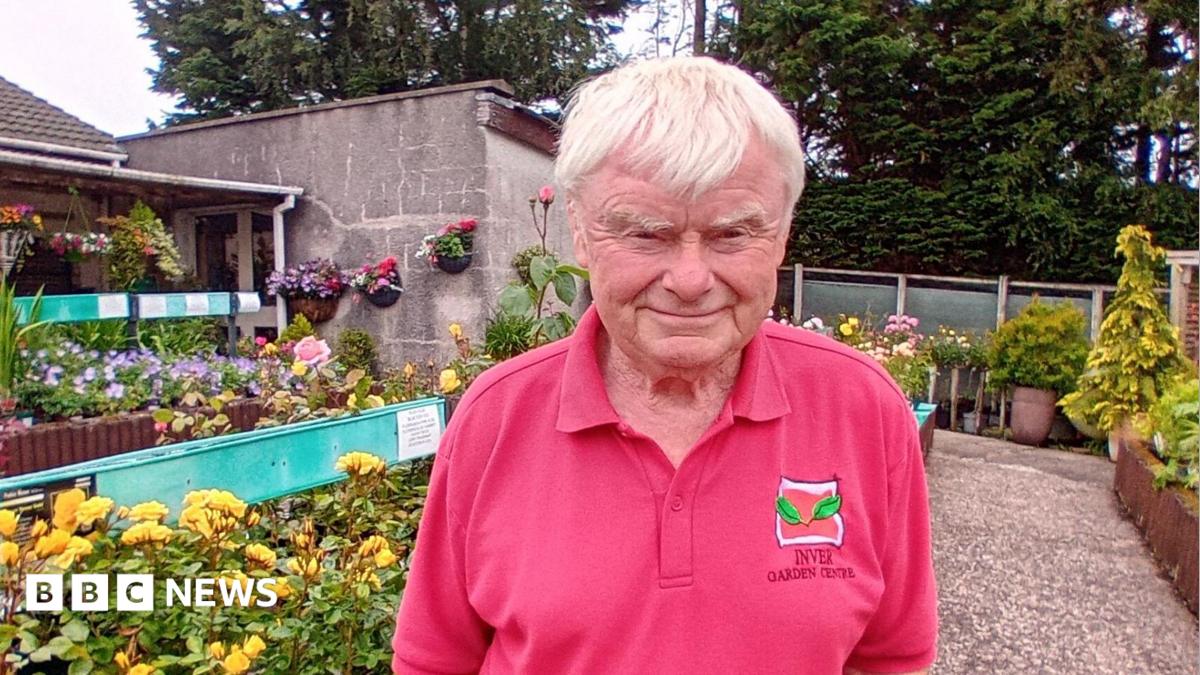
- John Shannon's anecdote about the £387 export charge illustrates friction for small firms but is presented as a singular example.
- The article notes the suspension of devolution (2022‑2024) only briefly, providing limited context on political fallout.
The piece presents a balanced, data‑driven overview of Brexit’s mixed economic effects in two Northern Ireland port towns, citing official statistics and quoting stakeholders with opposing experiences, while avoiding emotive language or calls to action.
Key Points
- Uses verifiable quantitative data (ONS regional GVA growth figures) and explicitly notes its time‑frame limits.
- Presents multiple, contrasting first‑hand accounts (a garden‑centre owner facing extra charges and a food manufacturer gaining new customers).
- Explains policy context (EU single market for goods, Windsor Framework) with dates and concrete mechanisms, allowing readers to verify the information.
- Maintains a neutral tone, provides no urgent or persuasive directives, and openly acknowledges gaps (e.g., broader UK‑wide costs).
- References publicly available sources (ONS, government statements) rather than anonymous or opaque authorities.
Evidence
- “The most comparable data is known as regional Gross Value Added (GVA), produced by the Office for National Statistics (ONS). It only goes up to 2023… Northern Ireland's economy grew by 11.5% in real terms, noticeably outperforming the UK national average of 8.7%.”
- Quotes from two business owners: John Shannon describing a £387 export charge and Brian Reid describing new contracts after Brexit, illustrating divergent impacts.
- Explanation of the Brexit deal: “Northern Ireland would stay in the EU's single market for goods… This gives Northern Ireland manufacturers unique 'dual market access'… It was January 2021 before these measures were put in place and they have been modified… by the Windsor Framework in 2023.”