Both analyses agree the piece is a scholarly‑style commentary that cites a single expert and discusses Soviet and modern Russian propaganda. The critical perspective flags modest emotional framing and reliance on one authority as potential manipulation cues, while the supportive perspective highlights the author’s disclaimer, lack of calls to action, and factual tone as signs of credibility. Weighing the evidence suggests only mild persuasive techniques, leading to a low manipulation rating.
Key Points
- The article relies on one scholar (Reed Johnson), which could amplify authority but is not uncommon for brief academic commentary.
- Emotionally charged phrasing (e.g., "most chilling part", "must be quashed") is present, but it is limited to historical description rather than urging present‑day action.
- The author explicitly disclaims expertise and avoids urgent or persuasive language, supporting a more neutral presentation.
- Both perspectives note the absence of overt coordination cues (hashtags, timing signals), reducing suspicion of coordinated manipulation.
- Overall, the evidence points to mild framing rather than systematic propaganda, suggesting a low manipulation score.
Further Investigation
- Verify Reed Johnson’s credentials and the context of his quoted statements to assess whether they are representative.
- Compare the article’s framing with other scholarly treatments of Soviet propaganda to gauge typicality.
- Examine the full publication venue and any editorial notes for potential hidden agendas or sponsorship.
The piece is largely an academic discussion of Soviet propaganda, but it employs modest emotional framing, a single expert authority, and selective historical contrast that could subtly steer readers toward a negative view of Soviet and contemporary Russian narratives.
Key Points
- Uses a single scholar (Reed Johnson) as the primary authority, giving his interpretation outsized weight without presenting counter‑views (potential authority overload).
- Employs emotionally charged language (“most chilling part”, “must be quashed”, “millions… died”) that can evoke fear or moral outrage about the Soviet era.
- Frames Soviet propaganda as a tool that created urgency and justified mass death, while contrasting it with modern Russian propaganda that allegedly glorifies a “dark past”, subtly positioning current Russia as regressive.
- Omits broader historiographical debate about the effectiveness of Soviet propaganda and the complexity of Stalin’s policies, limiting context for readers.
- Uses metaphorical framing (“bright future” vs. “heroic dark past”) that guides perception without explicit argument, a mild but present framing technique.
Evidence
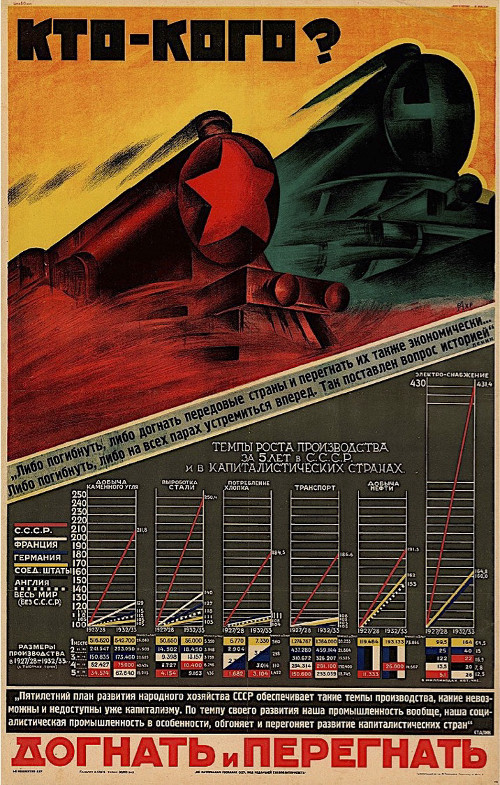
- "The most chilling part of Stalin’s propaganda messages is their attitude toward dissent... ‘Anyone who stands in the way of our progress must be quashed,’ is the message."
- "Johnson notes a shift in emphasis... ‘Don’t just sit there and wait for the communist future to come,’ is the message. ‘You need to actively move toward a better future.’"
- "Interestingly, Johnson says this approach provides a notable contrast to the messages coming out of the Kremlin today. ‘Vladimir Putin’s propaganda at the moment is very reliant on invoking the heroic dark past…’"
- "Only one expert, Reed Johnson, is cited and his credentials are presented briefly (Senior Lecturer in Russian), with no reference to other scholars or dissenting interpretations."
- "The article does not discuss the broader scholarly debate on the impact of Soviet propaganda, nor does it acknowledge alternative explanations for the visual shifts described."
The piece reads like a scholarly commentary, naming a single academic source, providing contextual detail, and avoiding calls to action or overt emotional appeals.
Key Points
- Cites one clearly identified expert (Reed Johnson) with modest credentials, avoiding authority overload
- Presents a nuanced, balanced analysis that acknowledges limits and contrasts historical and contemporary propaganda without advocating a position
- Lacks urgent or persuasive language, emotional triggers, or requests for immediate action
- Provides concrete historical context and specific examples of posters rather than vague or sensational claims
- Shows no timing cues, coordinated messaging, or external agenda signals
Evidence
- "I want to stress, however, that I’m not an art historian," – explicit disclaimer of expertise
- The article does not ask readers to act now; it merely describes historical urgency in the propaganda itself
- Contrast drawn between Stalin-era posters and Putin’s current messaging is presented as observation, not persuasion
- Mentions factual historical outcomes (e.g., millions dying from famine) without exaggeration
- No hashtags, viral cues, or coordinated release timing are evident