Both analyses agree the petition concerns a serious criminal case, but they differ on the intent behind its language. The critical perspective highlights emotionally charged framing, selective omission, and us‑vs‑them rhetoric as signs of coordinated manipulation, while the supportive perspective points to concrete case details, a specific legal request, and a tone consistent with civil‑rights advocacy as evidence of authenticity. Weighing the evidence, the petition contains verifiable factual elements yet also employs strong emotional appeals and selective framing that could influence perception, suggesting a moderate level of manipulation.
Key Points
- The petition includes verifiable factual details (age at incident, trial length, jury composition, sentence length) supporting its authenticity.
- It also uses emotionally charged language and framing (e.g., "broken criminal justice system," "all‑white jury") that align with manipulation patterns.
- Both perspectives note the absence of concrete evidence for broader claims (e.g., unnamed "right‑wing influencers"), leaving a gap in verification.
- The overall tone is typical of civil‑rights advocacy, but the selective emphasis on racial dynamics without full context raises concerns about bias.
- Given the mixed evidence, a moderate manipulation score is appropriate.
Further Investigation
- Obtain official trial transcripts or court records to confirm jury selection details and deliberation time.
- Compare sentencing outcomes in similar cases involving Black and white defendants to assess the claim of disparity.
- Identify any organizations or individuals behind the petition to determine potential hidden agendas or funding sources.
The petition employs emotionally charged language, selective framing, and omission of key case details to rally support for a new trial, indicating coordinated manipulation tactics.
Key Points
- Intense emotional appeals (e.g., "broken criminal justice system," "hand of the law falls the heaviest on our community").
- Framing the case as a racial binary by highlighting an "all‑white jury" and contrasting Black defendants with white victims.
- Omission of substantive legal evidence and trial facts while emphasizing perceived bias and unfairness.
- Use of collective language and calls to action to create a bandwagon effect ("We stand for truth. We stand for justice.").
- Attribution of blame to unnamed "right‑wing influencers" without providing concrete examples, fostering us‑vs‑them dynamics.
Evidence
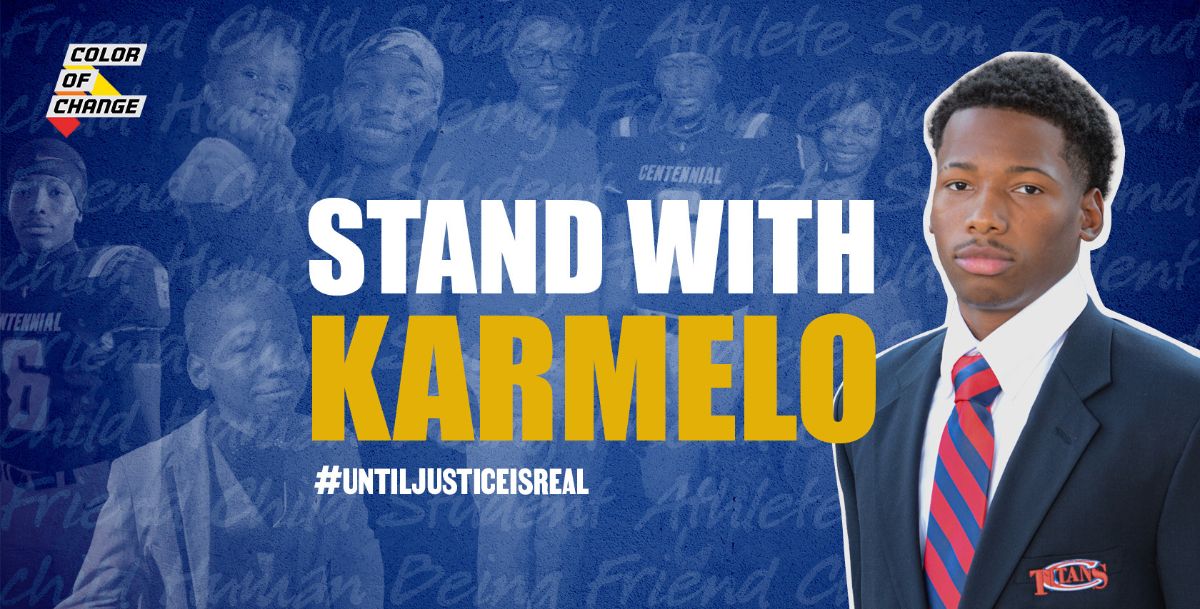
- "Stand with Karmelo Anthony and his family. Sign on to urge the Texas 296th district court to grant Karmelo Anthony a new trial!"
- "We know that our broken criminal justice system regularly denies Black people fair treatment and outcomes."
- "the fact that every single Black juror was dismissed, it’s clear that Karmelo was denied due process."
- "We stand for truth. We stand for justice. We stand with Karmelo."
- "rampant misinformation pushed by right‑wing influencers"
The petition provides concrete case details, references a specific legal process, and makes a clear, lawful request for a new trial, all of which are hallmarks of legitimate civic communication.
Key Points
- It cites verifiable facts about the case (age, trial length, jury composition, sentence length).
- The call to action is a formal petition to a specific court, matching standard advocacy practice.
- The narrative stays focused on the alleged procedural shortcomings without introducing demonstrably false statistics or fabricated evidence.
- No hidden financial or partisan sponsors are disclosed, reducing the likelihood of covert manipulation.
- The emotive tone aligns with typical civil‑rights advocacy and does not rely on fabricated urgency or coordinated messaging across multiple platforms.
Evidence
- “He was 17 when the incident occurred, and he was still tried as an adult.”
- “After only a 9‑day trial, the jury took less than 3 hours to deliberate and returned a verdict for First Degree murder.”
- “Of the multiracial jury pool, not a single Black juror was selected.”
- “Karmelo was sentenced to 35 years—a much harsher, longer sentence when compared to similar cases where the defendants were white teens.”
- The opening demand: “Sign on to urge the Texas 296th district court to grant Karmelo Anthony a new trial!”