Both analyses note that the article mixes verifiable climate data with emotionally charged framing. The critical perspective highlights war‑like metaphors, selective quoting, and cherry‑picked heat records as manipulation tactics, while the supportive perspective points to concrete temperature timestamps, attributed expert quotes, and references to peer‑reviewed work as signs of authenticity. Weighing the evidence suggests the piece contains credible data but also employs rhetorical strategies that increase its persuasive intensity, leading to a moderate level of manipulation.
Key Points
- The article provides specific, time‑stamped temperature data and cites recognized experts, supporting its factual core (supportive perspective).
- It repeatedly uses war metaphors and emotionally loaded language (“Turkey Shoot”, “game is up”) that frame climate denial as an enemy, a pattern identified as manipulative (critical perspective).
- Both perspectives agree the piece includes some expert voices, but the critical view argues opposing views are dismissed without substantive engagement, while the supportive view sees inclusion of anecdotal beach‑goer comments as balancing (mixed evidence).
- The presence of a peer‑reviewed study (O’Neill 2022) is a credibility marker, yet the study is cited to argue visual framing rather than to substantiate climate science claims, blurring the line between evidence and persuasion.
Further Investigation
- Obtain the full article to assess how opposing scientific views are presented or omitted.
- Verify the cited temperature records against official Met Office archives and examine the broader climatological context for the highlighted heat events.
- Review the cited O’Neill 2022 study to determine whether its findings are applied accurately or used primarily to support a framing argument.
The piece employs war metaphors, selective authority quoting, and emotionally charged language to frame climate denial as a malicious, conspiratorial enemy, while presenting cherry‑picked heat‑record data as decisive proof.
Key Points
- War and battle framing (e.g., “Turkey Shoot”, “propaganda war”) creates an us‑vs‑them narrative.
- Selective use of expert voices while dismissing opposing views without substantive engagement (authority overload).
- Cherry‑picked extreme‑heat records are highlighted without contextual climate variability or attribution uncertainty.
- Emotive language and repetition of terms like “deniers”, “corrupt”, and “game is up” amplify fear and anger.
- Humanizing climate‑friendly images versus abstract statistics for the “danger” side reinforces tribal division.
Evidence
- "Invitation To A Turkey Shoot – How To Debunk Climate Denial"
- "the game is up. Go and bore someone else with your nonsense." – Paul Hudson
- "climate scientists and ‘alarmist’ politicians are faking data to secure research grants and tyrannical control of society"
- "Many visuals were positively valenced (in contrast to article texts), framing heatwaves as “fun in the sun”." – Saffron O'Neill study
- "climate change is not a religion. No belief is required. It is about evidence." – Katharine Hayhoe (used to contrast with “belief” language elsewhere)
The article cites specific, time‑stamped data from reputable sources, includes direct quotations from named experts with institutional affiliations, and presents a few counter‑perspectives, all of which are typical markers of authentic communication.
Key Points
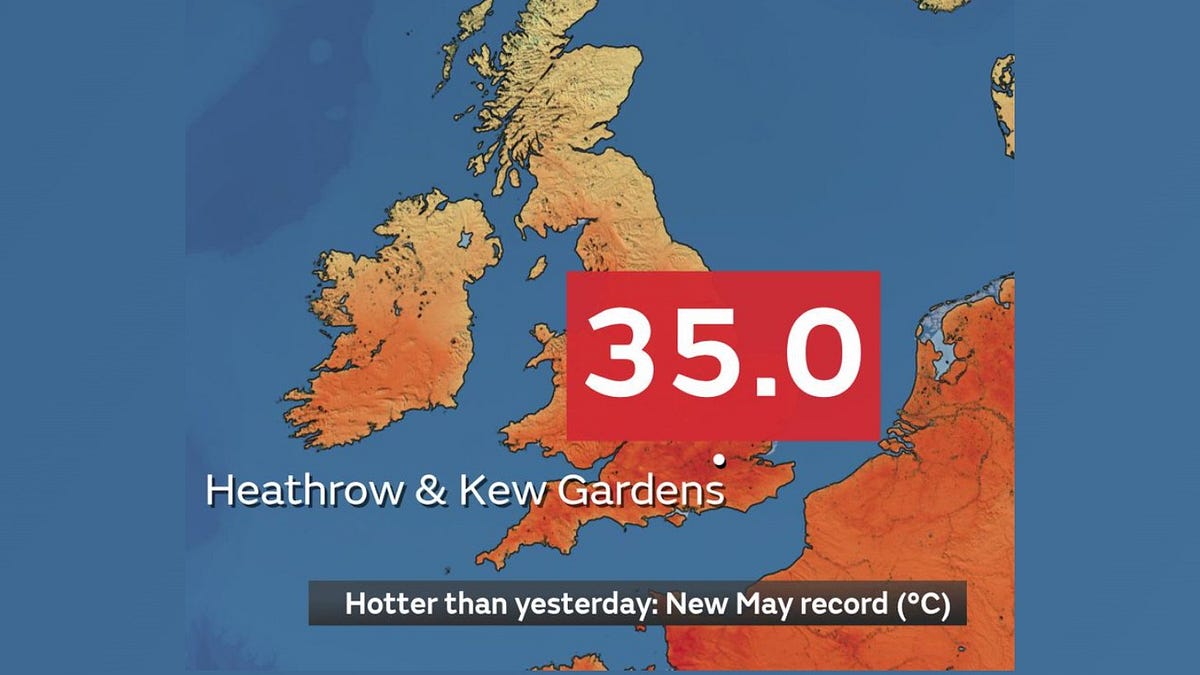
- Uses verifiable temperature records and timestamps (e.g., Met Office tweet on 26 May reporting 35.0 °C).
- Provides direct, attributed quotes from recognized meteorologists and climate scientists (BBC’s Paul Hudson, Katharine Hayhoe, Bill McGuire).
- References a peer‑reviewed academic study (Saffron O'Neill, 2022) and a specialist outlet (Carbon Brief) to support its claims.
- Includes anecdotal remarks from ordinary beachgoers, suggesting an attempt at balanced reporting.
- Lacks an explicit urgent call‑to‑action or fundraising request within the excerpt, reducing overt persuasion pressure.
Evidence
- Met Office X post on 26 May: “Today is now the hottest day in May on record… 35.0 °C”.
- Quote from Katharine Hayhoe: “As a climate scientist, let me fact‑check that… climate change is making heat waves hotter, longer, more frequent and more dangerous.”
- Citation of Saffron O'Neill’s 2022 study on visual reporting of heatwaves across several European countries.
- BBC beachgoer comments expressing personal enjoyment of the heat, providing a non‑expert viewpoint.
- Carbon Brief’s observation that major UK newspapers offered little editorial commentary on the heat event.