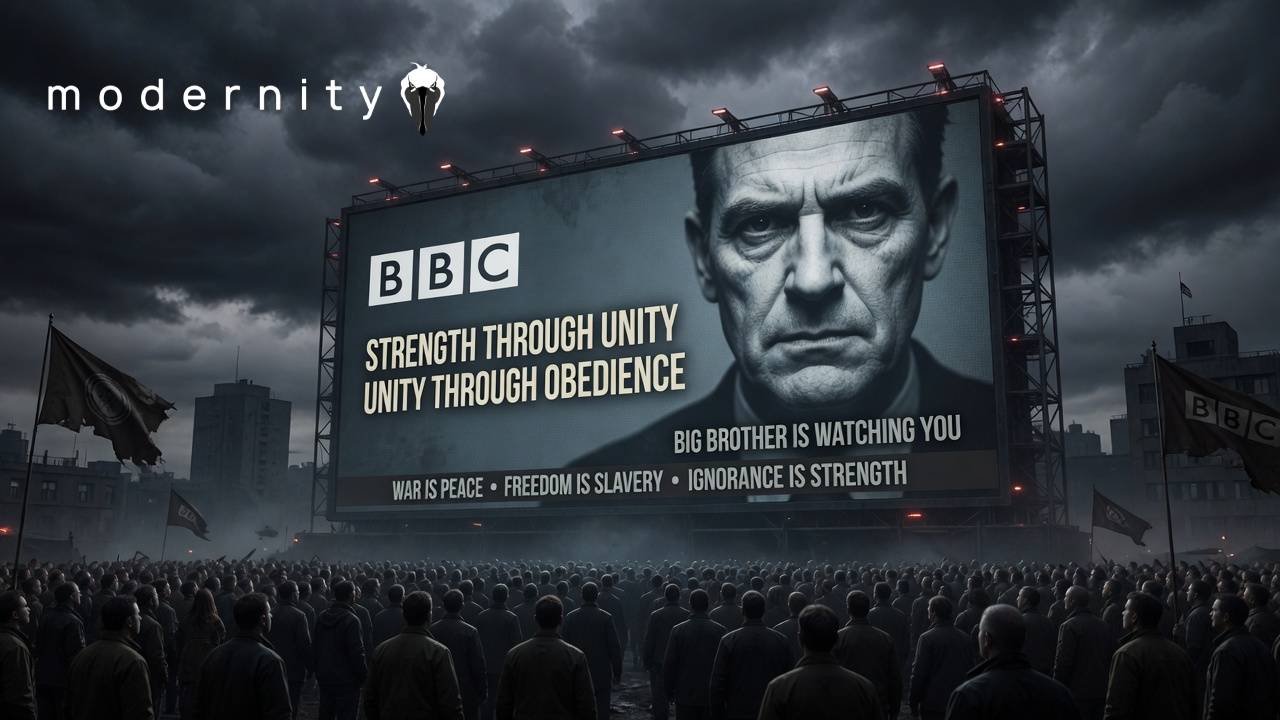
Both analyses acknowledge that the piece contains verifiable statistics and quotations, but they diverge on how those facts are framed. The critical perspective highlights the use of alarmist language, historical analogies, and selective citation that shape a polarising narrative, suggesting manipulation. The supportive perspective points to concrete data sources, identifiable quotes, and traceable links that lend authenticity. Weighing the evidence, the content appears to blend factual elements with persuasive framing, indicating a moderate level of manipulation.
Key Points
- The article mixes genuine data (e.g., Ofcom statistics, policy references) with emotionally charged language (“Ministry of Truth”, “thought police”) that can bias perception.
- Selective citation of authorities (Telegram founder, former BBC director) without full context raises questions about balance, as noted by the critical perspective.
- Verifiable elements (Twitter handles, URLs, known legislative actions) support the supportive perspective's claim of authenticity.
- Historical analogies to Nazi propaganda function as a slippery‑slope argument, a classic manipulation tactic identified by the critical perspective.
- Overall, the presence of both credible sources and manipulative framing suggests moderate manipulation rather than outright deception.
Further Investigation
- Verify the full quotations from Pavel Durov and the former BBC news director to assess context and completeness.
- Cross‑check the cited Ofcom statistics against the official Ofcom report for the exact figures and methodology.
- Examine the linked tweets and URLs to confirm they match the quoted content and are not taken out of context.
The piece employs fear‑laden language, selective authority citations, and Nazi‑era parallels to portray the UK policy as an authoritarian “Ministry of Truth,” while framing dissenters as propaganda‑peddlers. These tactics create a polarized us‑vs‑them narrative and encourage readers to reject the proposal without substantive evidence.
Key Points
- Emotional manipulation through alarmist terms like “Ministry of Truth,” “thought police,” and “mass censorship.”
- Appeal to authority by citing Ofcom data, a quote from Telegram founder Pavel Durov, and a former BBC news director without providing full context or corroborating evidence.
- Historical analogy to Goebbels and Nazi propaganda to invoke moral panic and a slippery‑slope argument.
- Bandwagon and tribal division cues, repeating the same slogans across multiple tweets and labeling critics as “propaganda” to pressure conformity.
- Cherry‑picked statistics (e.g., “51% of adults get news from social media”) and false‑dilemma framing that present only two extreme outcomes.
Evidence
- "Yes, they want to turn social media into a literal Ministry of Truth."
- "In 1933, Goebbels argued that Germans needed protection from false information... In 2026, Starmer says..."
- "Telegram founder Pavel Durov warned that the policy represents the digital iceberg that could sink the free internet."
- "The pattern is unmistakable: governments leveraging regulatory power to privilege official or state‑funded sources while algorithmically demoting alternatives."
- "During Covid, @BBCNews was the main purveyor of “misinformation”."
The piece includes verifiable data points, direct quotations from identifiable public figures, and references to specific policy proposals that can be cross‑checked, which are hallmarks of legitimate communication.
Key Points
- Cites Ofcom statistics (51% of adults, 75% of 16‑24‑year‑olds get news via social media) that are publicly available.
- Quotes multiple independent actors (The Telegraph, Allison Pearson, Bernie, Chris Rose) with Twitter handles, allowing source verification.
- Mentions concrete government actions (BBC content prioritisation, under‑16 social‑media ban) that have been reported in mainstream news outlets.
- Provides URLs and tweet links that can be followed to confirm context and content.
- Primarily describes the debate rather than issuing direct calls for immediate coordinated action.
Evidence
- “Officials frame the move as essential to combat ‘disinformation,’ citing Ofcom data that social media serves as the main news source for 51% of adults and 75% of 16‑ to 24‑year‑olds.”
- “The Telegraph (@Telegraph) June 20, 2026” and other Twitter handles (Allison Pearson, Bernie, Chris Rose) are explicitly included.
- Reference to the “under‑16s social media ban” aligns with known UK legislative activity reported in June 2026.
- Links such as https://t.co/FdWZy5nj6s and https://t.co/tXKG70saVJ are present, enabling verification of the quoted statements.
- The narrative presents both criticism of the policy and acknowledgment of the government’s stated goal (combat disinformation), indicating a balanced framing.