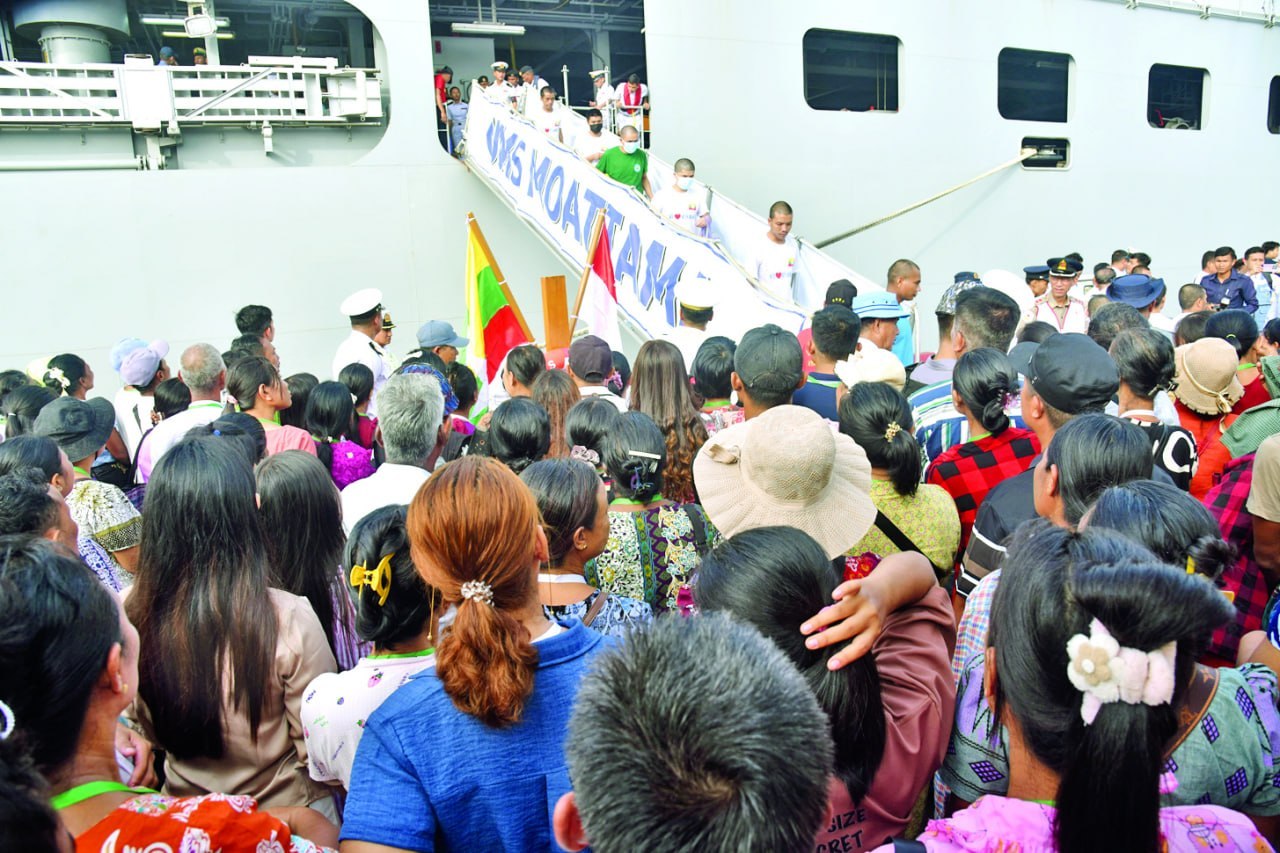
Both analyses agree that the article contains concrete, time‑stamped facts and quotes from families, UNHCR, and Malaysian officials, which support its credibility. The critical perspective highlights modest manipulation through uniform phrasing, selective omission, and timing that coincides with diplomatic events, while the supportive perspective stresses the presence of multiple verifiable sources and restrained language. Weighing the stronger evidential support for authenticity against the noted framing tactics leads to a conclusion that the piece shows limited, not extensive, manipulation.
Key Points
- The article provides specific, verifiable details (dates, numbers, quotes) that bolster its authenticity.
- Uniform phrasing across outlets and the timing of release suggest a coordinated narrative, indicating modest manipulation.
- Selective omission of legal context and detention conditions weakens full transparency, but the story also acknowledges gaps, mitigating suspicion.
- Overall, the evidence for credible reporting outweighs the manipulation cues, pointing to a low‑to‑moderate manipulation level.
Further Investigation
- Obtain the original UNHCR statement from Sept. 30 to confirm wording and context.
- Compare the article’s language with reports from other independent news outlets covering the same event to assess the extent of uniform phrasing.
- Seek official Malaysian government documentation on the bilateral repatriation agreement to verify the stated numbers and timelines.
The article shows modest manipulation through consistent framing, selective omission, and timing that aligns with diplomatic events, while employing limited emotional language to generate sympathy for the detainees.
Key Points
- Uniform phrasing across outlets suggests coordinated messaging
- Framing of "military custody" and "hardship" casts Myanmar authorities negatively
- Key details such as legal basis for detention and conditions are omitted, leaving gaps
- The story’s release shortly after the Malaysia‑Myanmar meeting leverages heightened attention
Evidence
- "Over 400 Myanmar nationals, who are ethnic Rakhine, deported from Malaysia earlier this month remain in military custody..."
- "They had already endured hardship in Malaysian immigration detention..."
- "Malaysia’s bilateral agreement... will repurpose up to 5,000 Myanmar nationals..."
- "The UNHCR stated on Sept. 30 that it was concerned over the continued conflict..."
The article provides specific, time‑stamped facts, quotes from affected families, and references to official statements from the UNHCR and the Malaysian prime minister, indicating a conventional news‑style report rather than a coordinated propaganda piece.
Key Points
- Multiple independent sources are cited (family members, UNHCR, Prime Minister Anwar Ibrahim) with no reliance on anonymous “experts”.
- Concrete dates, locations, and numbers (e.g., 400 Rakhine returnees, arrival on Oct 4, Thilawa Port) enable external verification.
- The narrative presents both the humanitarian concerns and the diplomatic context, avoiding a one‑sided or binary framing.
- Language is factual and restrained; emotional terms appear sparingly and are tied to quoted witnesses, not inserted by the author.
- The story acknowledges gaps (e.g., unknown detention facilities) rather than concealing them, which is typical of transparent reporting.
Evidence
- Quote from a family member to DVB ("We thought they would be allowed to return home…") provides a first‑hand perspective.
- Reference to the bilateral repatriation programme and the meeting between Min Aung Hlaing and Prime Minister Anwar Ibrahim on Oct 7‑8 offers a verifiable diplomatic event.
- Citation of UNHCR’s Sept 30 statement expressing concern about voluntary returns supplies an external, reputable source.