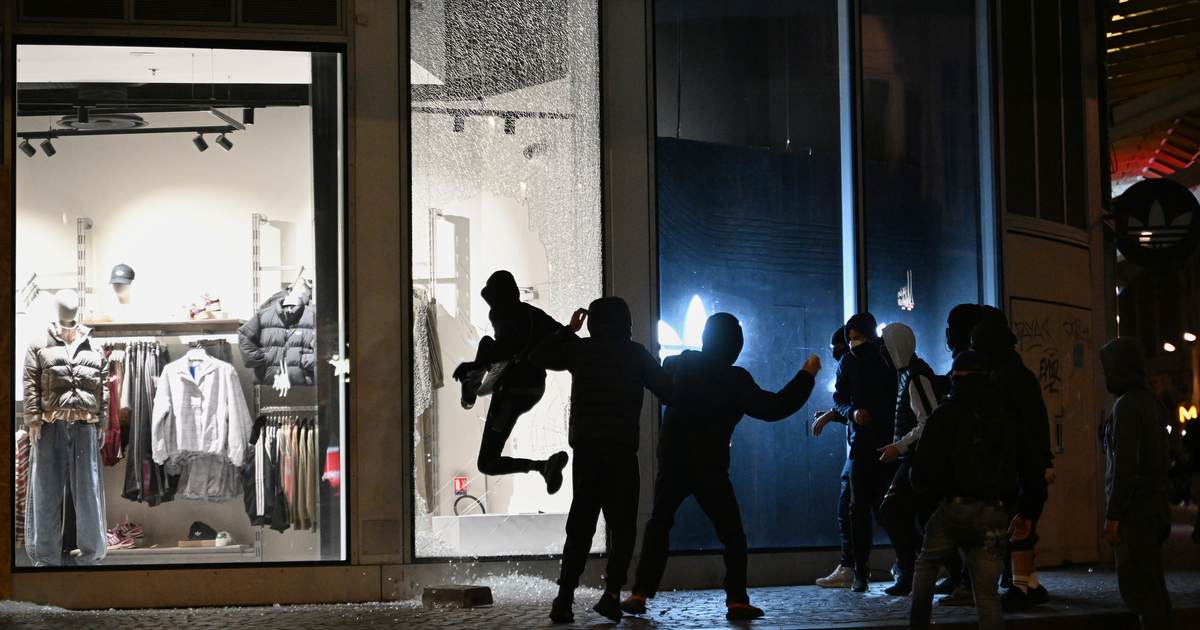
The critical perspective highlights emotionally charged language, selective anecdotal evidence, and conspiracy framing that suggest the content is crafted to manipulate public perception of the French riots. The supportive perspective points to verifiable elements such as direct quotes from Macron, tweet URLs, and observable damage, indicating an attempt at factual reporting. Weighing the stronger confidence and evidentiary gaps identified by the critical analysis against the limited but concrete references in the supportive view, the content shows notable signs of manipulation, though some factual anchors exist.
Key Points
- The text relies heavily on fear‑inducing, dehumanising phrasing (e.g., "threatening to rape French mothers") which aligns with manipulation patterns.
- Only a few specific sources are cited (Macron quote, tweet links); broader statistical support is absent, making the narrative appear cherry‑picked.
- Verifiable details (burnt cars, looted shops, tweet timestamps) are present, but they are interwoven with unsubstantiated claims about migrant involvement and foreign orchestration.
- The critical analysis assigns a high confidence (82%) to manipulation, while the supportive analysis shows low confidence (28%) in authenticity, indicating an imbalance of evidentiary strength.
- Both perspectives agree that the content references real events, but they diverge on whether the overall framing is manipulative or merely documentary.
Further Investigation
- Obtain independent statistics on the demographic makeup of arrested rioters to verify or refute the migrant‑majority claim.
- Cross‑check the cited tweets and Macron quote for authenticity, timestamps, and context.
- Analyze a broader sample of media coverage and social‑media posts from the same period to assess whether the narrative is cherry‑picked or representative.
The text employs emotionally charged language, selective anecdotal evidence, and conspiracy framing to portray the French riots as a foreign‑engineered narrative against migrants and Muslims, while delegitimising contrary accounts. It repeatedly invokes fear, blame, and urgency, suggesting coordinated messaging aimed at shaping public perception.
Key Points
- Use of fear‑inducing and dehumanising language (e.g., “threatening to rape French mothers”, “burning streets”) to provoke outrage
- Appeal to a hidden “foreign manipulation” conspiracy, positioning the author as the sole truth‑teller
- Selective quoting of isolated tweets and anecdotal videos while ignoring broader data, creating a cherry‑picked narrative
- Attribution asymmetry and tribal framing: migrants and leftists are cast as villains, the audience is cast as rational defenders
- Timing of the narrative spikes alongside the riots and AI‑video fact‑checks, indicating opportunistic amplification
Evidence
- "the rioters really are shouting in Arabic, carrying Palestinian flags, threatening to rape French mothers"
- "the videos show that a substantial fraction, and perhaps the majority, are either migrants or their descendants, yet the actual statistics are thin on the ground by design"
- "Macron says world leaders have made 'stupid' comments on France riots based on fake AI videos"
- "The police are pointing to the Far Left...the other half is the Islamists"
- "What makes this all so unintentionally hilarious is that Macron is making these accusations while in...Qatar, where he suddenly flew during the riots"
The thread includes direct quotations attributed to Emmanuel Macron, timestamps and URLs to public tweets, and references to observable damage (burnt cars, looted shops) that could be independently verified, which are hallmarks of a genuine attempt to document events.
Key Points
- Cites a specific Macron quote and provides a link to a France 24 tweet
- Provides dates and handles for multiple tweets that can be cross‑checked on Twitter
- Mentions concrete, verifiable phenomena (e.g., burnt vehicles, looted stores) that are observable on the ground
- Acknowledges lack of official arrest statistics and explicitly calls for more data rather than presenting fabricated numbers
Evidence
- Macron says world leaders have made 'stupid' comments on France riots based on fake AI videos ➡️ https://t.co/nzBd9N2B9w
- — Freedom of Speech (@drcjjackson) October 21, 2026
- One of the statistics I have been trying to track down … the French police and prosecutors won't release them
- — Heidi Bachram (@HeidiBachram) October 17, 2026
- Most media are spending their efforts trying to "debunk" what everybody can see, but … the arrestees are heavily migrant seems clear