Both analyses agree the piece contains verifiable details (FOI references, monetary figures, direct quotes) but diverge on its framing. The critical perspective highlights fear‑laden language, selective context, and authority appeals that could steer readers toward distrust, while the supportive perspective emphasizes the presence of concrete sources and a balanced tone. Weighing the factual grounding against the rhetorical cues suggests moderate manipulation risk.
Key Points
- The article includes verifiable data (e.g., £1.4 million spend, FOI citations, UN speech dates) supporting authenticity.
- Rhetorical choices—loaded terms like "secretive Ministries of Truth" and selective omission of broader budget context—introduce bias and potential manipulation.
- Both perspectives note the same quotations (e.g., Robert Jenrick on the Today programme), indicating the source material is consistent across interpretations.
- The presence of a counter‑statement from DCMS suggests an attempt at balance, but the overall tone leans toward alarmism.
Further Investigation
- Obtain the full FOI documents referenced to verify the exact scope and budget of the new centre.
- Compare the reported £1.4 million spend with the overall annual budget for information‑defence to assess context.
- Analyze additional statements from the National Centre for Information Defence to see if the alarmist language is echoed by official communications.
The piece employs loaded language, selective facts, and authority appeals to cast the new disinformation centre as secretive and potentially abusive, suggesting a covert agenda. It omits key contextual details (e.g., actual headcounts, budget totals) and frames the narrative to provoke distrust in the government’s information‑defence efforts.
Key Points
- Use of fear‑laden framing such as “secretive Ministries of Truth” and “propaganda work” to evoke alarm
- Selective presentation of £1.4 million spend without broader budget context, creating a cherry‑picked narrative
- Appeal to authority by quoting Conservative minister Robert Jenrick on unrelated BBC scandals to bolster criticism
- Omission of concrete data on headcount and budgets, leaving a gap that encourages speculation
- Attribution asymmetry: Burnham’s unit is described with negative verbs (“covering up”, “dished out”), while official statements are downplayed (“no plan to merge”)
Evidence
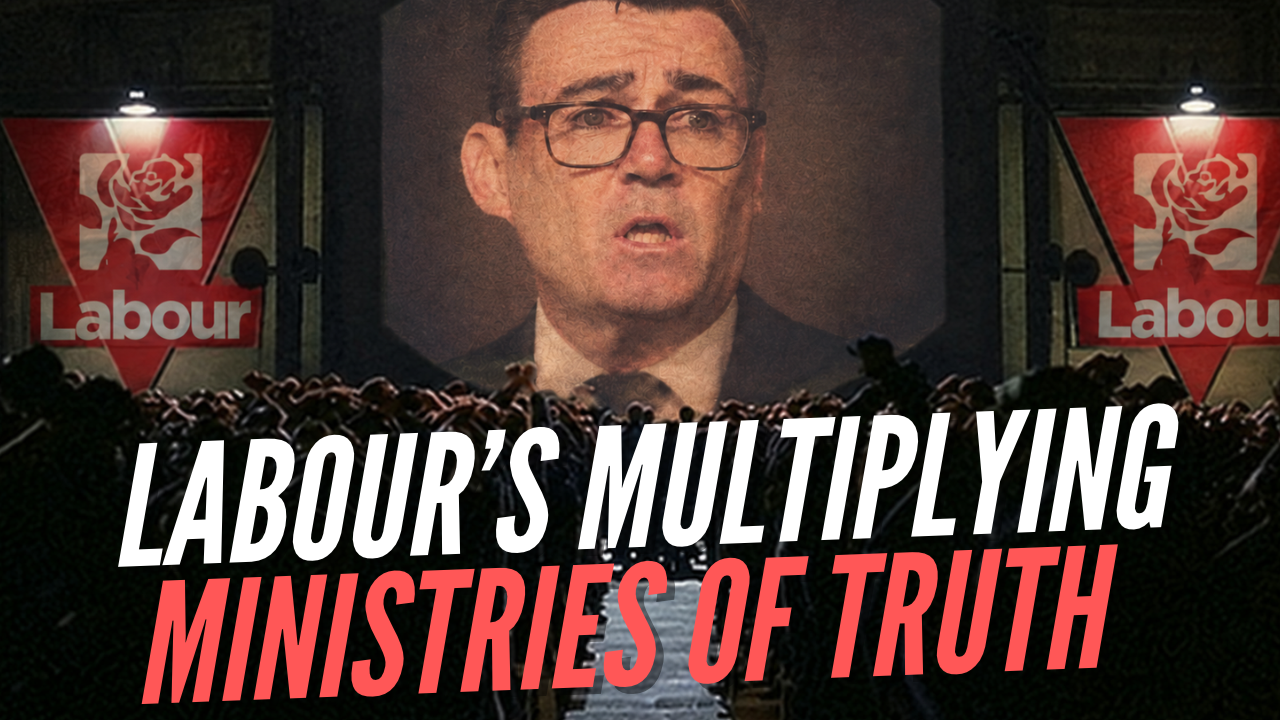
- "Just how many secretive Ministries of Truth does Burnham need?"
- "The unit has, though, dished out almost £1.4 million of taxpayer cash on contracts since July 2024"
- "Robert Jenrick on the Today programme: “Can you now give a guarantee … no BBC presenter … will be exposed as a paedophile…?”
The piece includes concrete references to FOI documents, specific dates, monetary figures, and direct quotations from officials, which are hallmarks of legitimate reporting. It does not issue calls for immediate public action and presents some government responses, suggesting a primarily informational intent.
Key Points
- Cites verifiable sources such as FOI releases, UN speech dates, and DCMS statements.
- Provides precise quantitative data (e.g., £1.4 million spent, dates of unit transfers).
- Includes a direct quote from a government minister (Robert Jenrick) without alteration.
- Presents at least one counter‑statement from DCMS, indicating an attempt at balance.
- Lacks explicit calls for urgent public mobilization or coordinated campaigns.
Evidence
- “Documents supplied to Guido’s FOI Unit show the old Counter Disinformation Unit… moved to DCMS on 21 July 2026.”
- “At the UN on 22 September, Burnham said his new National Centre for Information Defence would ‘detect, attribute and disrupt’ hostile information attacks.”
- “DCMS says there is no plan to merge the current NSOIT team into the NCID…”.
- “The unit has… dished out almost £1.4 million of taxpayer cash on contracts since July 2024.”
- “Robert Jenrick on the Today programme: ‘Can you now give a guarantee…?’”